Port Energy and Capacity Planning
Planning today’s shifts and tomorrow’s investment together.
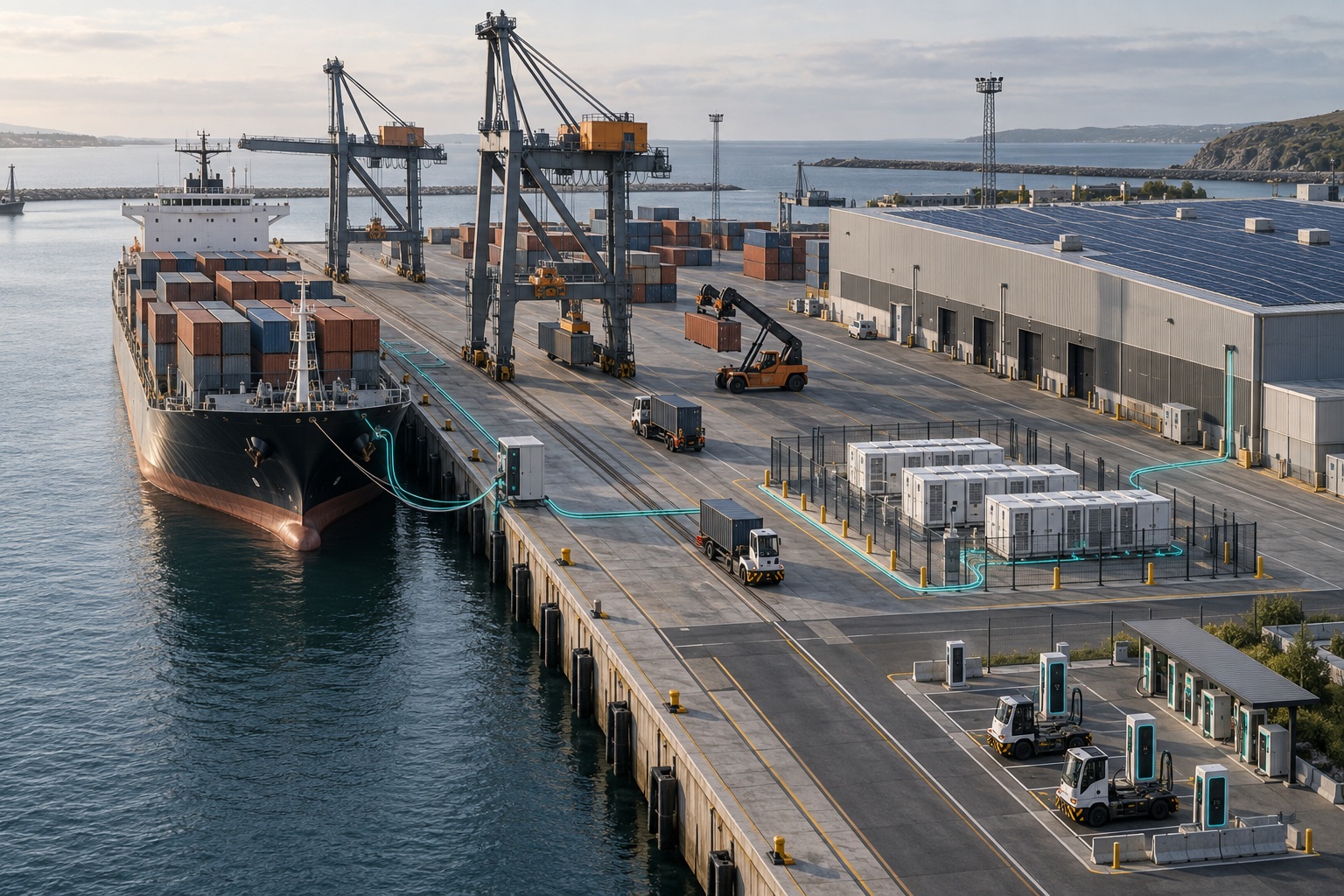
A proposed application linking vessel calls, cargo work, shore power and equipment charging to one forecast of electricity demand. Compare daily schedules and longer-term investment within grid, equipment and service limits.
Port operations, engineering, energy and investment teams, working with tenants.
Why the work matters.
Electrification can bring vessel, cargo-handling and charging demand together at the same peak. Grid capacity is constrained and infrastructure decisions must be made before future uptake is known. Ports need a common basis for using today’s connection and deciding what to build next.
The approach.
Propel brings port and energy operating experience together with forecasting and scheduling. Start at one terminal or constrained connection, establish a shared demand baseline, then compare operational flexibility with phased investment using the same model.
Follow the operational thread.
Connect the information, apply the relevant checks and make the next decision visible.
Connect operations and energy data
Bring meters, connection limits, equipment ratings, berth plans, vessel power needs and charging requirements into one timeline. Record data coverage, sources and agreed access boundaries for port and tenant information.
Forecast from planned activity
Model calls, cargo and equipment use, with scenarios for late arrivals, simultaneous berthing and electrification. Vessel arrival history, electrical loads and equipment ratings make the demand forecast more specific.
Compare workable schedules
Test charging times, storage and agreed flexibility against connection limits, available equipment and service deadlines. Show which constraint drives a change and expose any capacity shortfall.
Test the next investment stage
Compare phased shore power, charging, battery storage, onsite generation and grid upgrades. Include capital and operating costs, battery wear, space and sensitivity to demand and timing.
Different roles.
The same evidence.
Dashboards, timelines and work queues make the relevant information available before someone has to ask a question.
The next shift
Demand alongside vessel activity, charging and service deadlines.
The next investment
Capacity options, cost assumptions and sensitivity to future uptake.
Port and tenant coordination
Shared planning inputs within agreed commercial access boundaries.
What the user can inspect
- Operational schedules, meter data and input assumptions
- Grid and equipment limits, service obligations and scenarios
- The constraints and trade-offs behind each option
What this is designed
to improve.
- Make better use of an existing connection by identifying coinciding peaks
- Keep berth commitments, readiness deadlines and equipment limits visible
- Phase investment around demand scenarios and real operating needs
- Support grid connection applications and funding bids with a clearer demand case
- Test peak reduction and capacity-charge opportunities
- Give ports and tenants a shared basis for planning and energy agreements
Validate a representative baseline at one terminal. Test forecast quality, feasible operating value and investment rankings across changed uptake and connection scenarios.
A proposed application for supervised planning and investment decisions, with engineering review and agreed commercial data boundaries.
Connect the vessel
to the port’s plans.
voyageGRAPH™ supplies reconciled arrival and departure times, time alongside and energy history at berth. Full Fathom AI makes onboard electrical-load information, equipment ratings and shore-connection procedures available. With the operator’s agreement, these inputs can give a port a clearer view of when power is needed and how much.
Read the full engineering detail.
The updated PDF includes the approach, technical detail, business value and next steps.
Recognise the problem?
Choose one terminal, group of berths or constrained connection and one decision to improve. Agree a representative period of data and validate the baseline with port and tenant teams before comparing schedules or investments.