Home energy optimisation
Helping your solar panels, battery, car and heating work together.
Propel’s reference design brings solar, a home battery, car charging and heating into one plan. It looks ahead at weather, household routines and electricity prices, explains the trade-offs and keeps local fallback control available when a connection or device fails.
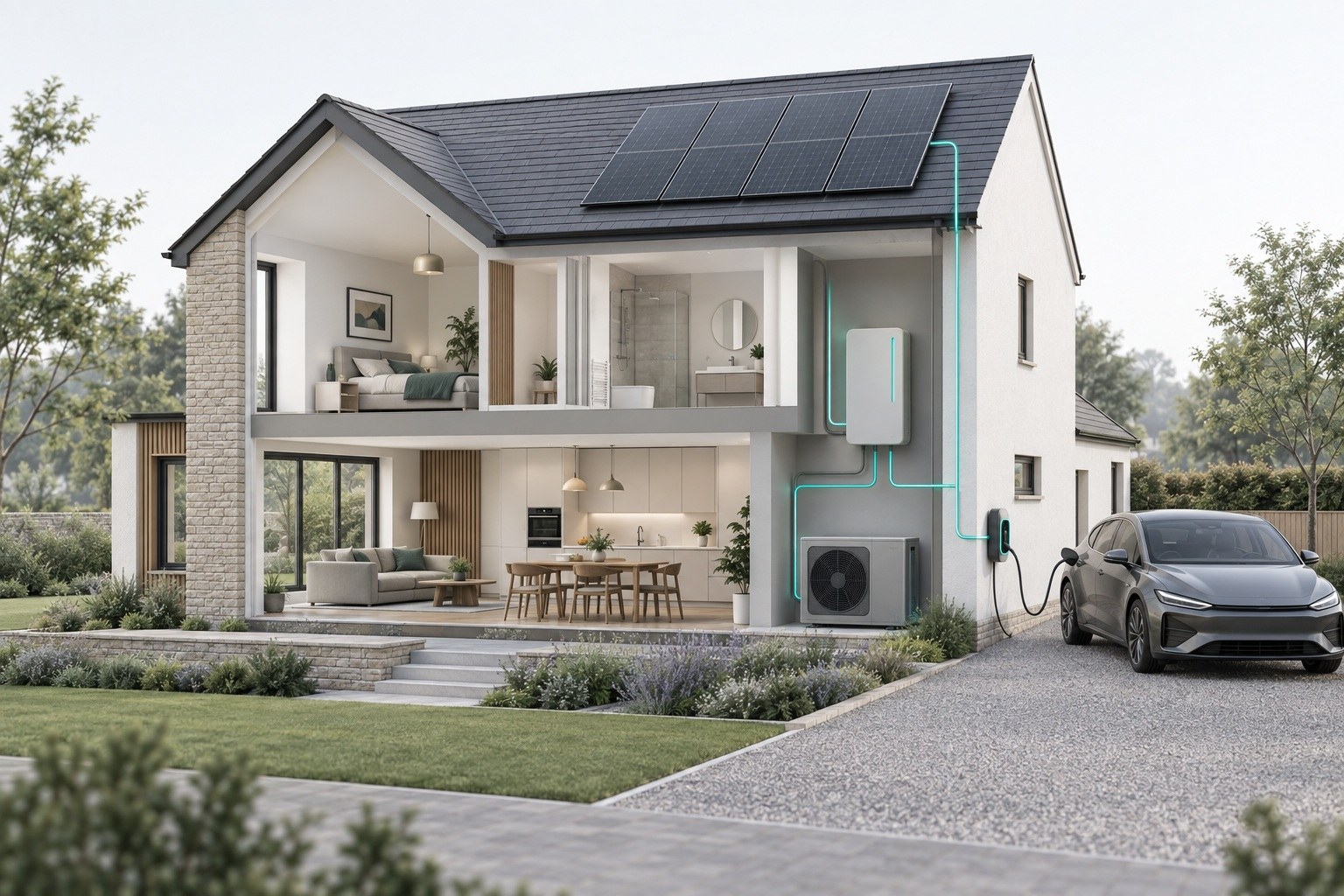
Energy suppliers, installers, equipment makers and teams coordinating connected home-energy systems.
Why the work matters.
Devices can each follow sensible schedules and still work against one another. They share the same supply while sunshine, prices and household plans change. The whole-home decision must balance running cost, carbon, self-generation, battery wear, comfort and readiness.
The approach.
Propel combines energy engineering, physical models, learned demand patterns and mathematical planning. The design looks one to two days ahead in half-hour steps, acts on the next step and replans as conditions change, with the reasons and user controls visible.
Follow the operational thread.
Connect the information, apply the relevant checks and make the next decision visible.
Understand the whole system
Bring meter readings, device states, solar output, weather and tariffs onto the same units and timeline.
Forecast with uncertainty
Estimate generation and demand, show plausible ranges and use published prices where they are already known.
Plan within real limits
Balance cost, carbon, battery wear and comfort against power limits, storage bounds and readiness deadlines.
Update and retain a fallback
Replan as conditions change. Local rules take over when needed, with independent equipment protections retained.
Different roles.
The same evidence.
Dashboards, timelines and work queues make the relevant information available before someone has to ask a question.
Forecast and actual
Expected generation and demand beside what happened.
The day’s plan
Charging, battery reserve and heating decisions with their reasons.
User preferences
Comfort, deadlines, priorities and manual override.
What the user can inspect
- Forecasts, tariffs and the current equipment state
- The household’s chosen goals and equipment constraints
- Decision logs, settings and fallback mode
What this is designed
to improve.
- Lower running costs by coordinating the whole home
- More effective use of solar generation, storage and flexible demand
- Tariff comparisons based on the household’s actual usage
- Comfort and car-readiness needs included alongside equipment limits
- A visible plan, manual override and dependable local fallback
- A foundation for energy scheduling on commercial and industrial sites
Compare against a sensible fixed-rule baseline using the same demand and weather. Include battery wear, forecast quality, missed readiness needs and actual energy use.
A reference design for coordinated home energy. Commercial and industrial applications use their own process models, constraints and control requirements.
Read the full engineering detail.
The updated PDF includes the approach, technical detail, business value and next steps.
Recognise the problem?
For installers, energy suppliers and equipment makers, start with the household outcome you want to improve. Northstar brings the device connections, planning and user controls together with the people who will use them.